Overview
- The Basque people are an Indigenous ethnic group primarily inhabiting the Basque Country, a region spanning parts of northern Spain and southwestern France.
- They are known for their unique language, distinct cultural identity, and strong sense of regional pride.
- The Basques refer to themselves as "Euskaldunak" (speakers of Euskara).
The Basque people are an ethnic group living in a region that spans northern Spain and southwestern France. Their traditional homeland is located around the western Pyrenees Mountains along the Bay of Biscay and is commonly known as:
The Basque Country
Today, the Basque Country includes:
- The Basque Autonomous Community in Spain
- Navarre in Spain
- The French Basque region in southwestern France
The Basque are considered one of the oldest ethnic groups in Europe. Although many studies have examined their origins, their ancestry has not been fully explained and continues to be a subject of research.
One of the most distinctive features of the Basque people is their language:
Euskara (Basque language)
Unlike Spanish, French, and other neighboring languages, Euskara is considered:
A language isolate
meaning that no confirmed relationship has been established between Euskara and any other living language family.
As a result, it is regarded as one of the most unique languages currently spoken in Europe.
Throughout history, the Basque region experienced Roman rule and the political changes of medieval Europe while maintaining its own language and cultural traditions.
During the Middle Ages, various forms of local self-government developed in the region. Basque communities maintained their own customary laws and local institutions for centuries.
As modern nation-states emerged in Spain and France, the status of Basque language and culture changed significantly. During parts of the 20th century, particularly under the dictatorship of Francisco Franco in Spain, the public use of the Basque language was restricted.
In the decades that followed, however, efforts to revive and promote the Basque language and culture expanded. Today, Euskara is taught in schools and supported by various cultural and educational institutions.
Basque society has traditionally placed strong importance on local communities and family connections. Historically, important economic activities included:
- Fishing
- Agriculture
- Livestock raising
- Trade and commerce
The Basque are also known for a rich cultural heritage that includes:
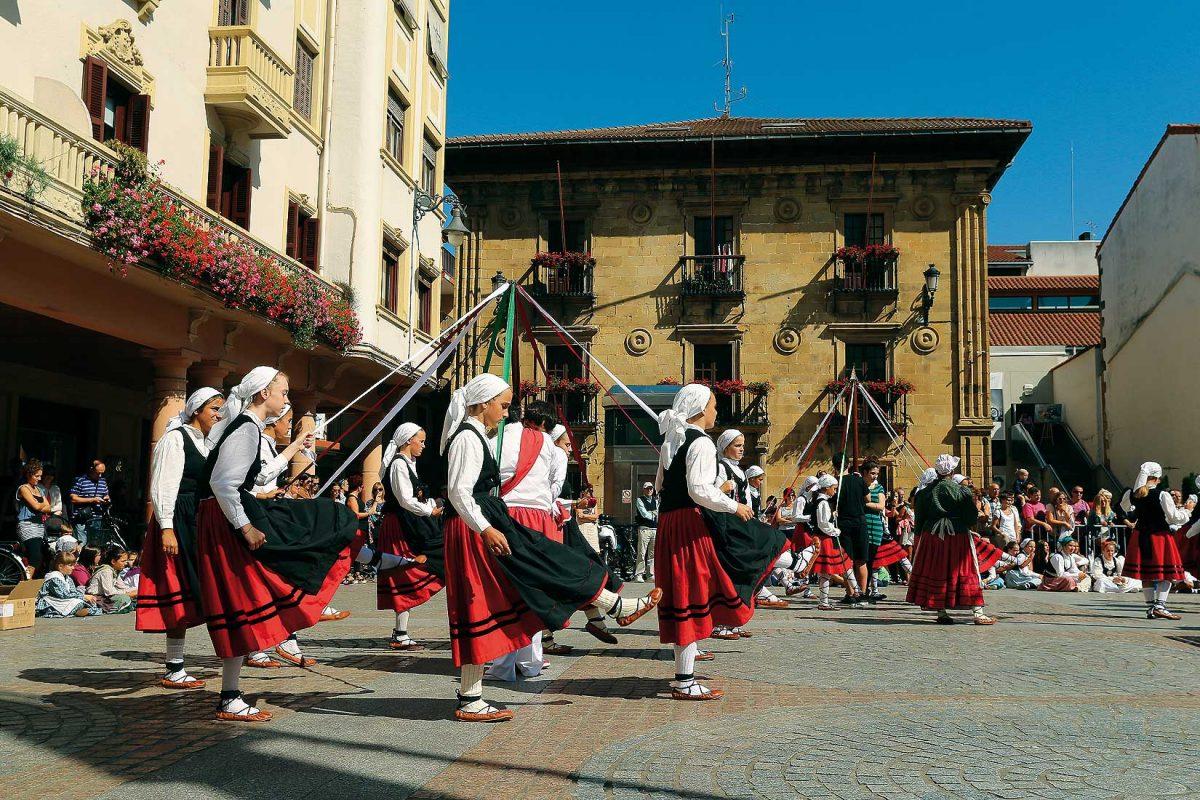
- Traditional dances
- Folk music
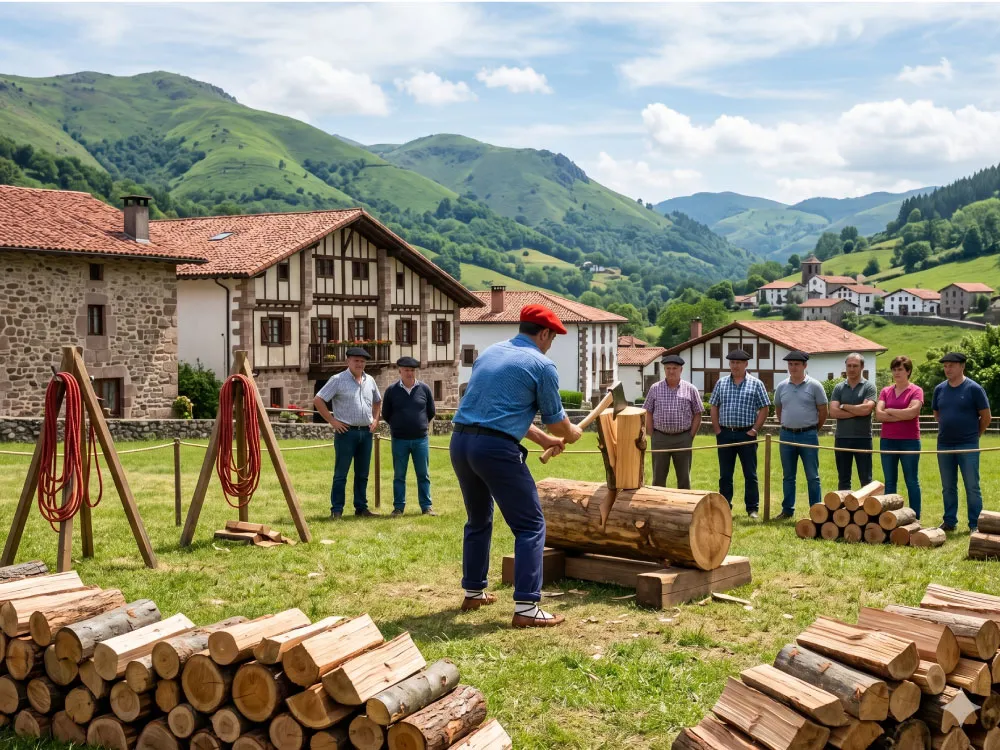
- Wood-chopping competitions
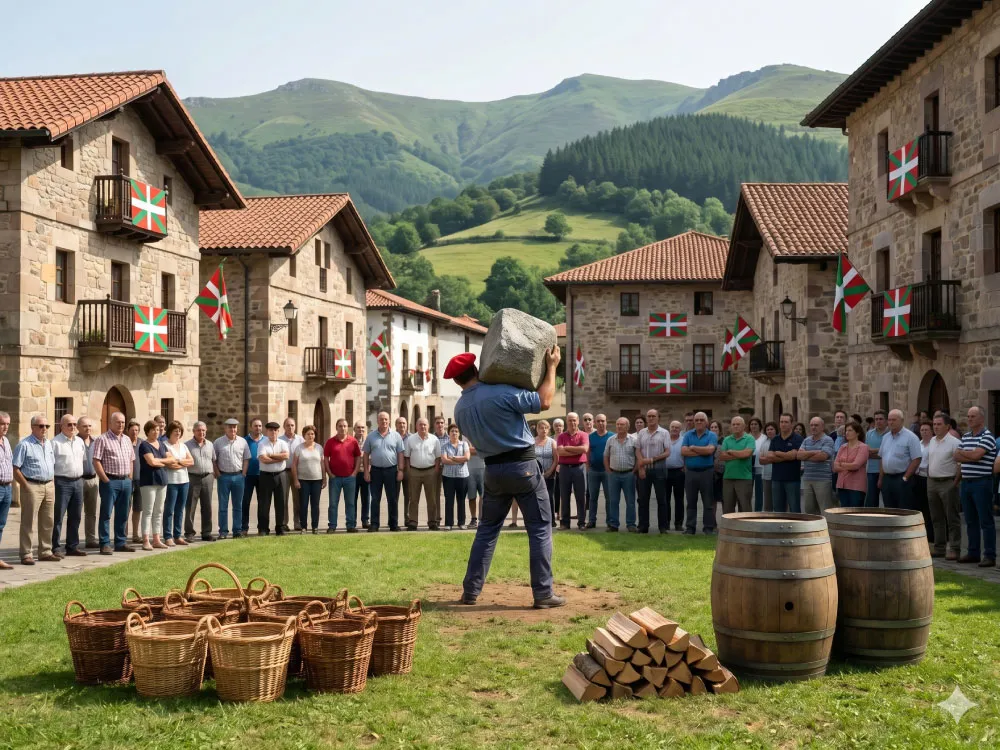
- Stone-lifting competitions
- Basque Pelota
Among these traditions,
Basque Pelota
is one of the best-known traditional sports of the region.
In terms of religion, Catholicism has historically played a major role in Basque society, although various local customs and traditional festivals have also remained important aspects of community life.
Today, many Basque people live in urban areas and are active in fields such as education, arts, sports, politics, science, and technology.
The Basque Autonomous Community in Spain maintains a significant degree of self-government, and ongoing efforts continue to support and preserve Basque language and culture.
Today, the Basque people are recognized as one of Europe's most distinctive ethnic groups, and their unique language, long history, and strong regional identity continue to represent an important part of Europe's cultural diversity.
Location
- In Spain: Basque Autonomous Community (Bizkaia, Gipuzkoa, Araba) and Navarre.
- In France: Three provinces in the Pyrénées-Atlantiques (Labourd, Soule, Lower Navarre)
- The region is mountainous and coastal, with a rich natural environment.
- The Basques have inhabited the western Pyrenees since prehistoric times.
- They resisted full Romanization and maintained linguistic and cultural independence for centuries.
- In the Middle Ages, they formed the Kingdom of Navarre.
- Although integrated into Spain and France over time, they have maintained a strong push for autonomy and cultural preservation.
Culture
- Architecture:White-walled houses with red trim, traditional farmhouses called etxe.
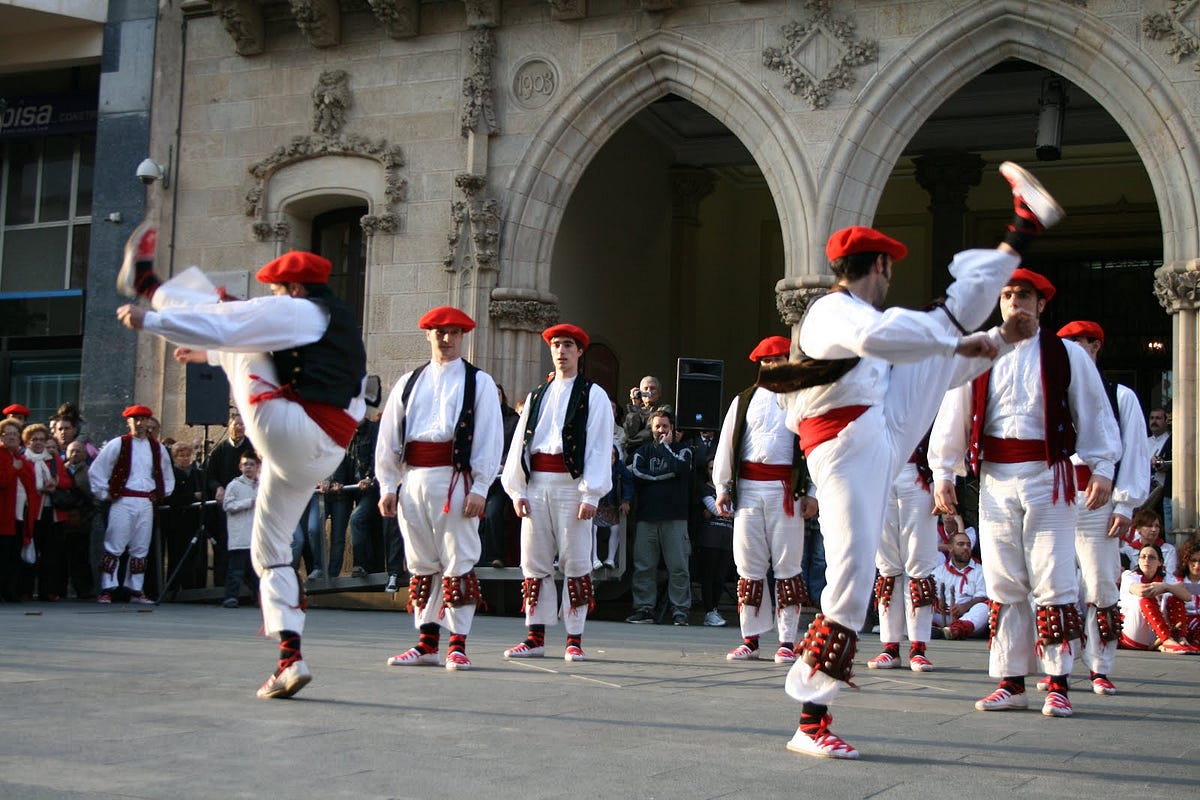
- Music & Dance:Energetic footwork in circle dances like aurresku and live percussion.
- Cuisine:Famous for pintxos (Basque tapas), Basque cheesecake, and cod dishes.
- Sports:Traditional rural sports include wood chopping and stone lifting.
Basque Symbols and Flag
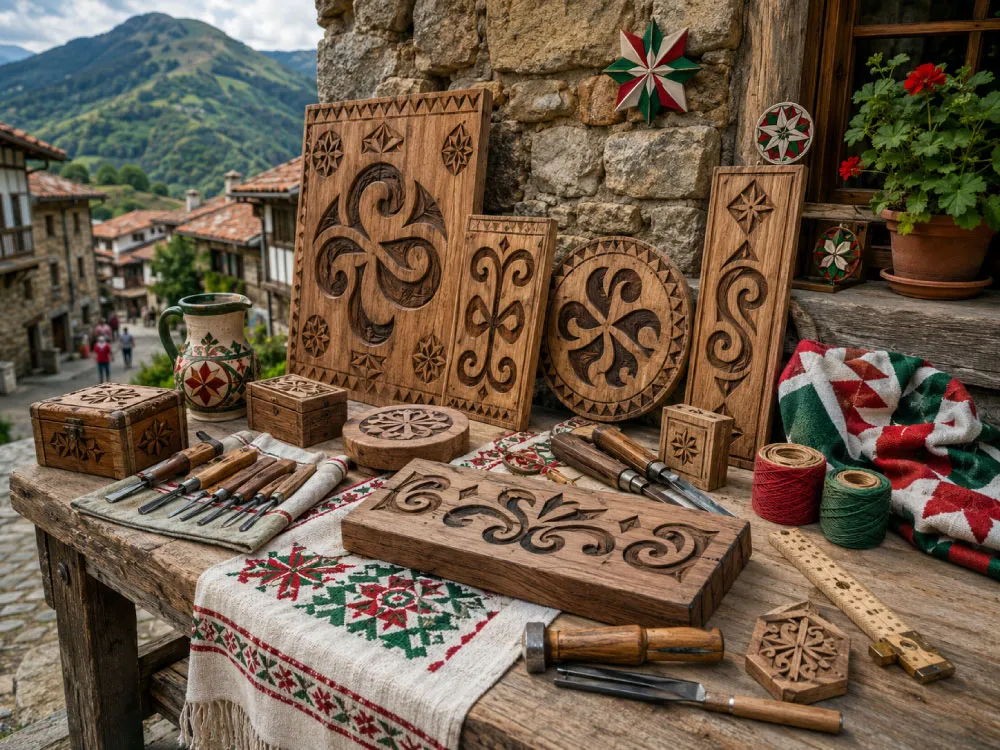
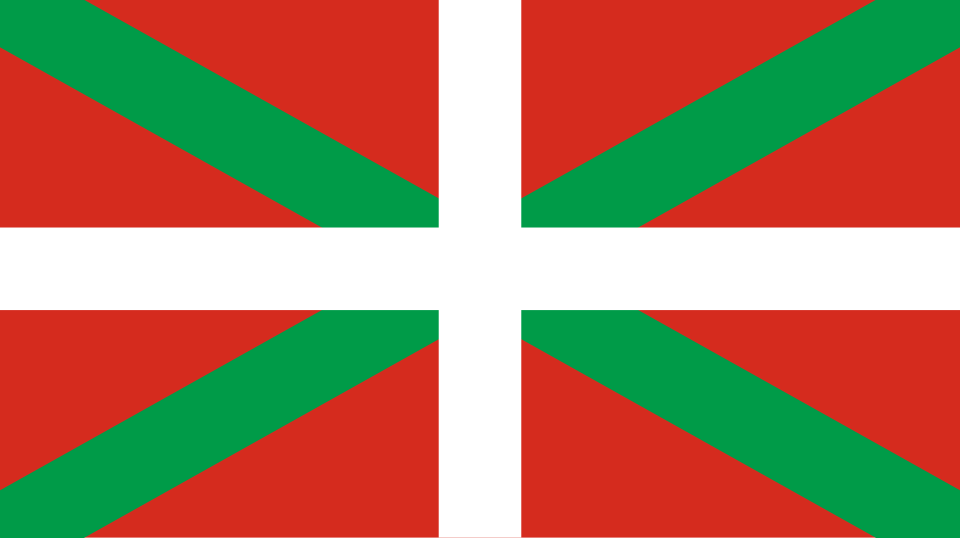
Basque culture is rich in symbolic imagery, many of which are closely connected to nature, identity, and continuity. One of the most well-known symbols is the lauburu, a four-armed spiral representing life, balance, and protection.
Traditional Basque symbols appear in architecture, textiles, flags, and folk art, serving as visible expressions of cultural heritage and regional pride.
・Red background = the people, white cross = Catholicism, green saltire = freedom. History
Lauburu A traditional swirled cross symbol representing life and eternity.
Basque beret (boina):A classic hat linked to Basque identity.
Language
- Basque (Euskara) is a language isolate—unrelated to any other known language family.
- One of Spain’s official languages in the Basque Country and used alongside Spanish.
- Modern standard version: Euskara Batua (Unified Basque)
- Estimated speakers: 750,000 (mostly in Spain)
Language Origins and Linguistic Features
The Basque language (Euskara) is a language isolate with no known relatives, believed to descend from the ancient Aquitanian language. It is not part of the Indo-European family and likely predates its arrival in Europe. While some theories suggest links to Iberian or Caucasian languages, no definitive connections have been proven.
Basque is an ergative-absolutive language with an SOV word order. It features extensive agglutination, a rich case system (over 14 cases), and no grammatical gender. Verbs encode subject, direct object, and indirect object, often requiring auxiliary verbs like izan (to be) or ukan (to have).
Sources (International Databases)
・en.wikipedia.orgen.wikipedia.org
・britannica.com
britannica.com
・ja.wikipedia.org
ja.wikipedia.org
・languagesgulper.com
languagesgulper.com
・languagesgulper.com
languagesgulper.com
・ameblo.jp
ameblo.jp
・aboutbasquecountry.eus
aboutbasquecountry.eus
Writing System of the Basque Language
The Basque language, known as Euskara, is written using the Latin alphabet. Unlike neighboring Romance languages, Euskara is a language isolate, meaning it has no known linguistic relatives.
Modern Basque orthography was standardized in the 20th century, allowing the language to be used consistently in education, media, and literature. This standardization has played a crucial role in language revitalization efforts.
Today, written Basque appears in newspapers, books, signage, digital media, and educational materials throughout the Basque Country.
Common Basque Greetings and Phrases
Basque greetings reflect a strong sense of community and local identity. Below are some commonly used expressions:
| English | Basque (Euskara) | Pronunciation |
| Hello | Kaixo | kai-sho |
|---|---|---|
| Good morning | Egun on | eh-goon on |
| Good night | Gau on | gow on |
| Thank you | Eskerrik asko | es-keh-rik ah-sko |
| Nice to meet you | Pozten naiz zuri ezagutzeaz | pos-ten naiz soo-ree e-sa-goot-seh-az |
| Delicious | Gozoa da | go-zo-ah da |
| Fun/Enjoyable | Dibertigarria da | dee-ber-ti-gar-ri-ah da |
These expressions are widely used in daily life and serve as important markers of Basque cultural identity.
Traditional Cultural Activities and Oral Tradition
Oral tradition has long played a central role in Basque culture. Storytelling, folk songs, and improvised poetry known as bertsolaritza have been used to transmit history, values, and humor across generations.
Traditional sports, music, and dance are also important cultural expressions, often performed during local festivals and communal celebrations.
Modern Revitalization and Cultural Preservation
In the modern era, Basque language and culture have experienced a strong revival. Language education programs, bilingual schools, and media outlets have significantly increased the number of Basque speakers.
Contemporary Basque identity is expressed through literature, music, cinema, and digital media. These efforts ensure that Basque culture remains vibrant and relevant in the modern world.
Region
Continent:Europe
Population and Geographic Distribution
The Basque people traditionally inhabit the Basque Country, a region spanning northern Spain and southwestern France. This area has been home to Basque-speaking communities for thousands of years.
Today, several million people identify as Basque, with significant diaspora communities in the Americas, particularly in Argentina, Chile, and the United States.
The Relationship Between the Basque People and the Basque Autonomous Community
The Basque Autonomous Community is a Spanish autonomous community that institutionalizes part of the Basque people and the broader Basque cultural region.
The Statute of Autonomy of Gernika, approved in 1979, states that “the Basque people” or “Euskal Herria,” as an expression of their nationality and in order to attain self-government, constitute an autonomous community within the Spanish state under the name “Euskadi” or “the Basque Country.”
However, the Basque Autonomous Community is not the same as the entire homeland of the Basque people.
Today, the Basque Autonomous Community is a political and administrative unit made up of three historical territories: Álava, Bizkaia, and Gipuzkoa. In contrast, the broader Basque cultural region is often understood to include Navarre on the Spanish side and Iparralde, the Northern Basque Country, on the French side.
In other words, the Basque people and Basque culture extend beyond the borders of the Basque Autonomous Community.
Navarre is historically connected to the Basque cultural region, but it is not part of the Basque Autonomous Community today. The Statute of Autonomy states that Navarre may join the Basque Autonomous Community if the required legal procedures are fulfilled. The Spanish Constitution also includes provisions concerning the possible incorporation of Navarre into the Basque autonomous system. Nevertheless, Navarre currently remains a separate autonomous community within Spain.
The Basque People as an Ethnic and Cultural Group, and the Basques as a Political Community
One important point is that the ethnic or cultural meaning of being Basque does not always match the political meaning of being Basque.
Under the Statute of Autonomy, the political status of being Basque is not based only on ancestry or ethnic origin. It is granted to people who are officially resident in municipalities within the Basque Autonomous Community.
The statute also provides that people living abroad, as well as their descendants, may retain certain political rights as Basques if their last legal residence in Spain was in Euskadi and if they maintain Spanish nationality.
This means that the Basque Autonomous Community is not simply a community of ethnic Basques. It is a modern self-governing region made up of the people who live there, including residents of diverse origins.
Recent population data also shows that the Basque Autonomous Community is shaped by migration. Its population has continued to grow not because of natural population increase, but largely because of positive migration flows. A significant number of residents were born abroad, making the region a contemporary and diverse society as well as a historical center of Basque identity.
The Basque Autonomous Community as a Framework for Protecting the Basque Language
The Basque Autonomous Community also plays a central role in protecting and revitalizing the Basque language.
The Statute of Autonomy defines Euskera, or the Basque language, as the language of the Basque people and recognizes it as an official language of Euskadi, alongside Spanish. The institutions of the autonomous community are required to guarantee the use of both languages and to establish the necessary measures and institutions to support them, while taking into account the sociolinguistic diversity of different areas.
As a result, the Basque Autonomous Community has become one of the main institutional bases for the recovery and promotion of the Basque language.
In education, public administration, and social life, language policy has helped increase knowledge of Basque among residents. According to official statistics, the proportion of people with knowledge of Basque has increased over time, especially among younger generations.
This does not mean that every resident of the Basque Autonomous Community speaks Basque fluently. Rather, it shows that the autonomous institutions have played a major role in creating conditions for the language to survive, be taught, and be used more widely.
A Self-Governing Community Built on Three Historical Territories
The Basque Autonomous Community is not only a regional government. It is also built on three historical territories: Álava, Bizkaia, and Gipuzkoa.
These territories have their own historical institutions and a strong tradition of self-government. The Statute of Autonomy recognizes their right to preserve, restore, and update their own institutions.
This structure is reflected in the Basque Parliament. The parliament is composed of representatives from the three historical territories, with each territory sending the same number of members. This means that Bizkaia, which has a larger population, and Álava, which has a smaller population, have equal territorial representation in the parliament.
The system therefore emphasizes not only population size, but also the historical balance among the three territories.
Each historical territory also has its own General Assembly and Foral Provincial Council. These institutions hold important powers in areas such as taxation, finance, social welfare, roads, agriculture, and local administration.
One of the most distinctive features of the Basque Autonomous Community is its fiscal system. The relationship between the Basque institutions and the Spanish state is based on a traditional economic agreement. Under this system, the historical territories have strong authority to maintain, establish, and regulate their own tax systems within their territories.
For this reason, the Basque Autonomous Community is not merely an ordinary administrative region. It is a political framework that carries forward historical forms of Basque self-government into the modern constitutional system of Spain.
Summary
The Basque people and the Basque Autonomous Community are closely related, but they are not the same thing.
The Basque people are an ethnic, cultural, and linguistic community associated with a broader Basque region that extends across parts of northern Spain and southwestern France. The Basque Autonomous Community, on the other hand, is a self-governing political entity within Spain, made up of the three historical territories of Álava, Bizkaia, and Gipuzkoa.
The Basque Autonomous Community gives institutional form to the historical identity, language, and self-governing traditions of the Basque people within the Spanish state. However, it does not include all areas historically associated with Basque culture, such as Navarre or the French Basque Country.
It is also important to note that the Basque Autonomous Community is not made up only of ethnic Basques. Legally and politically, it is a community of residents. People who live there and meet the legal requirements can hold the political status of Basques, regardless of their ancestry.
At the same time, the autonomous community has become one of the most important frameworks for preserving the Basque language and supporting Basque culture. Through its institutions, language policies, historical territories, and fiscal autonomy, it serves as a modern political structure that reflects the long history of Basque self-government.
Sources (International Databases)
euskadi.eus
BIZKAIA-jjggbizkaia.eus
en.eustat.eus
en.eustat.eus
en.eustat.eus
The Relationship Between the Basque People and Spain
A Distinct Culture Within Spain
The Basque people are known as one of the peoples of northern Spain who have preserved a highly distinctive culture and language. Today, within Spain, the Basque Autonomous Community and parts of Navarre are closely associated with Basque culture.
Spain is a country made up of multiple autonomous communities. Within this structure, the Basque Autonomous Community consists of three historical territories: Álava, Bizkaia, and Gipuzkoa. Administratively, it is part of Spain, but in terms of language, food culture, sports, local traditions, and regional identity, it has strong cultural characteristics that distinguish it from many other regions.
One of the most important elements of Basque identity is the Basque language. Basque, or Euskera, does not belong to the Indo-European language family, which includes most major European languages. Its relationship to other major languages has not been clearly established, and it is therefore often described as a language isolate. For this reason, Basque is regarded as one of the most distinctive languages in Europe.
In the Basque Autonomous Community, Basque is an official language alongside Spanish. The extent to which Basque is used varies by area, but it continues to be passed on through education, public administration, cultural activities, and daily life. Basque is not only a means of communication; it is also an important symbol of cultural continuity for the Basque people.
Basque culture also has a strong presence within Spain through its food traditions. The Basque region is blessed with both the sea and the mountains, and its cuisine has developed around seafood, meat, vegetables, cheese, wine, and local ingredients. Pintxos, cod dishes, seafood, charcoal-grilled food, and Basque-style cheesecake are among the well-known examples of Basque culinary culture.
Traditional sports are also an important part of Basque regional culture. Basque pelota, a sport in which players hit a ball against a wall, is one of the best-known sports associated with the Basque region. There are also many traditional rural and maritime sports that developed from everyday labor, such as stone lifting, wood chopping, tug-of-war, grass cutting competitions, and rowing races.
In this way, the relationship between the Basque people and Spain cannot be explained simply as “a people living in Spain.” The Basque people live within the Spanish state while maintaining their own language, food culture, traditional sports, and local customs.
The Basque Autonomous Community is also a region that supports this culture within a modern institutional framework. Although it is part of Spain, it plays an important role in preserving and transmitting Basque language and regional culture. For this reason, the Basque Autonomous Community remains one of the most important places for understanding how Basque culture continues to exist within contemporary Spain.
ehu.eus
spain.info
britannica.com
eke.eus
etxepare.eus
basquecountry.eus
en.wikipedia.org
bascofinefoods.com
Access Guide
Basque Region
The currency of the Basque people is the Euro (EUR, €)
Note: The currency shown is the legal tender of the main region where the Basque people live (Euro). Other currencies may apply in different countries.
Access to Basque Country (Spain) from Major Cities
| Departure City | Direct/Transit | Arrival Airport | Flight Time (approx.) | Reference Fare (one-way/round-trip, Economy) |
| Los Angeles | LA → via Madrid → Bilbao | Bilbao Airport (BIO) | 14–19 hours | US$700–1,400 |
|---|---|---|---|---|
| New York | NY → via Madrid → Bilbao | Bilbao Airport (BIO) | 12–17 hours | US$650–1,200 |
| London | London → Direct to Bilbao | Bilbao Airport (BIO) | 2.5 hours | £120–350 |
| Tokyo | Tokyo → via Paris/Frankfurt → Bilbao | Bilbao Airport (BIO) | 17–22 hours | ¥140,000–230,000 |
| Sydney | Sydney → via Dubai/Doha, Madrid → Bilbao | Bilbao Airport (BIO) | 26–33 hours | A$1,300–2,400 |
| Hong Kong | Hong Kong → via Paris/Frankfurt → Bilbao | King Shaka Int’l (DUR) | 19–25 hours | HK$7,000–12,000 |
| Shanghai | Shanghai → via Paris/Frankfurt → Bilbao | Bilbao Airport (BIO) | 20–27 hours | CNY4,200–7,500 |
| Singapore | Singapore → via Istanbul/Doha → Bilbao | Bilbao Airport (BIO) | 18–25 hours | S$1,000–1,800 |
Language Origins
- Euskara is thought to predate Indo-European languages in Western Europe.
- It may be the oldest surviving language in the region, with unclear roots.
- Theories suggest it evolved in isolation in the western Pyrenees.
Writing System
- Uses the Latin alphabet with specific digraphs like tx (ch), tz (ts), z (s/z).
- Many Basque surnames and place names reflect ancient origins and meanings..
- Literacy in Basque is actively promoted in schools and media.
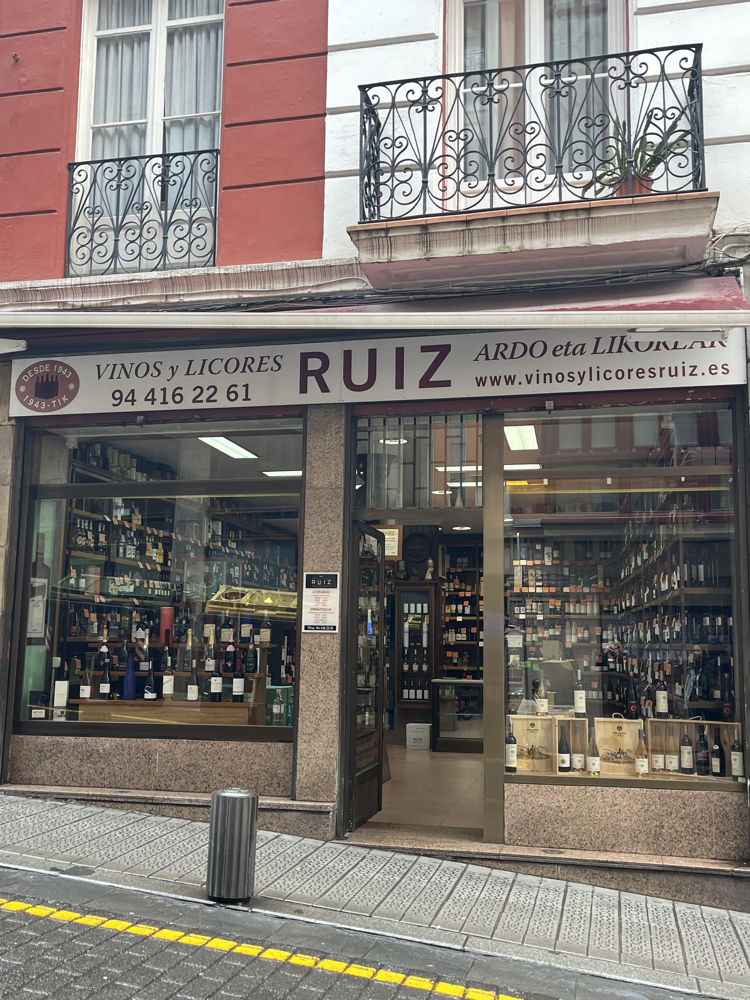
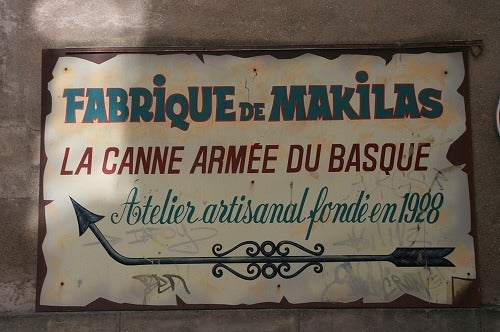
Basque uses the Latin alphabet with 27 letters, including “Ñ”. It relies on digraphs like btx (like “ch”), tz, and ll.
The orthography is phonemic, and accents are rarely used. Spelling reflects pronunciation closely.
Although Basque has no unique script, it features a distinct visual style called Letra Vasca. This traditional font, used in signage and decoration, includes flat-topped A’s and curled stroke endings. Fonts like Waskonia and Euskara replicate this visual identity digitally.
Detailed Habitat
- Spain: Bilbao (urban hub), San Sebastián (culinary center), Pamplona (cultural-historical)
- France: Bayonne, Saint-Jean-de-Luz, and smaller coastal towns
- Rural areas preserve more traditional lifestyles and language use.
Traditional Basque Games
Children’s Games
Over 800 traditional children’s games are recorded in the Basque Country. These include hopscotch, jump rope, top spinning, juggling with stones, and knife throwing.
Play often mimics adult roles like herding, markets, or festivals.
The proverb “Haurrak, haurlan” (“A child’s job is to play”) reflects the value placed on learning through play.
Adult Traditional Sports (Herri Kirolak)
Herri Kirolak refers to Basque rural sports, derived from farm and fishing labor. Common competitions include:
- Stone lifting (Harri-jasotzea): lifting stones up to 300kg
- Wood chopping (Aizkora proba): log cutting with axes
- Grass cutting (Segalaritza): scything speed trials
- Weight carrying (Txinga eramatea): distance walking with 50kg weights
- Hay bale throwing (Lasto botatzea): straw toss over a height bar
- Tug-of-war (Sokatira): 8-on-8 rope pulling
- Oxen-pulling (Giza-abere probak): animal-powered sled races
These events showcase strength and teamwork and are often featured in local festivals and modern championships. Events like the San Fermín festival include soapbox races based on these traditional sports.
Herri Kirolak preserve community identity and values of endurance, cooperation, and cultural pride.
1.Pelota (Pilota)
Basque handball-like game played against a wall (frontón).
2.Aizkolaritza
Competitive wood chopping; athletes use axes to split massive logs.
3.Harrijasotzaileak
Stone lifting contests requiring incredible strengt
4.Children’s games
Spinning tops, counting chants, and rhythm clapping games.
Introduction video
The Basque people embody linguistic mystery, cultural endurance, and a timeless connection to their land and identity—a true gem in the tapestry of world heritage.
Sources (International Databases)
・atlasetnografico.labayru.eus
atlasetnografico.labayru.eus
・en.wikipedia.org
en.wikipedia.org
・festival.si.edu
festival.si.edu